Journal
Journal
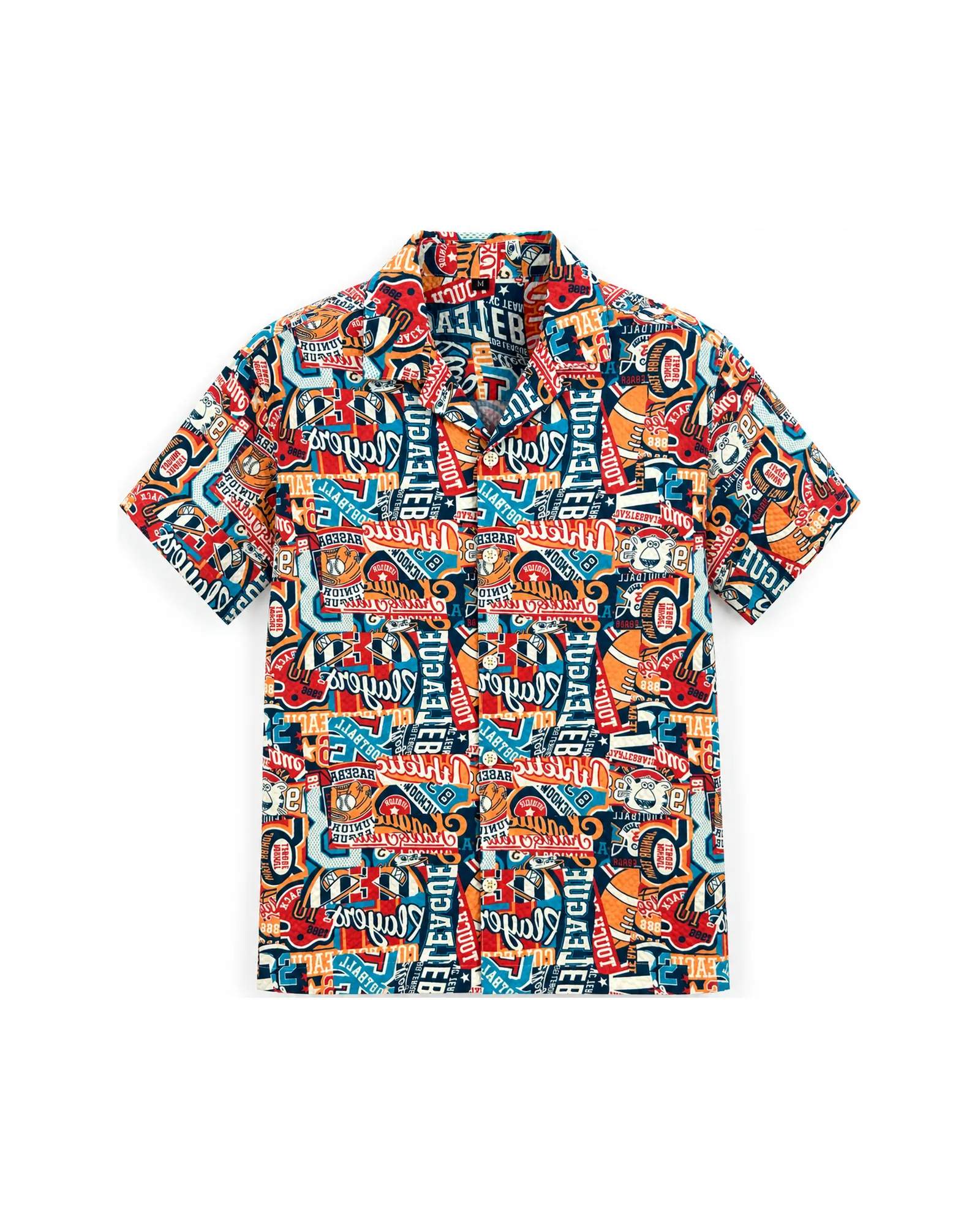
A bold print can make a short sleeve shirt stand out. But an approved artwork file does not yet define how that print should look on the finished garment. Before placing a custom all-over print shirt order, agree how the fabric, repeat scale, pattern placement and construction will work together.
Start with the silhouette: regular or relaxed fit, camp collar or conventional collar, straight or curved hem, and pocket or no pocket. Include a size chart or reference measurements. The same graphic can look different on a wider body, shorter sleeve or larger collar.
Our custom all-over print short sleeve shirt is a visual example of a busy graphic design combined with a button-front construction. Use a reference to explain the intended look, then define your own artwork, dimensions and garment details.
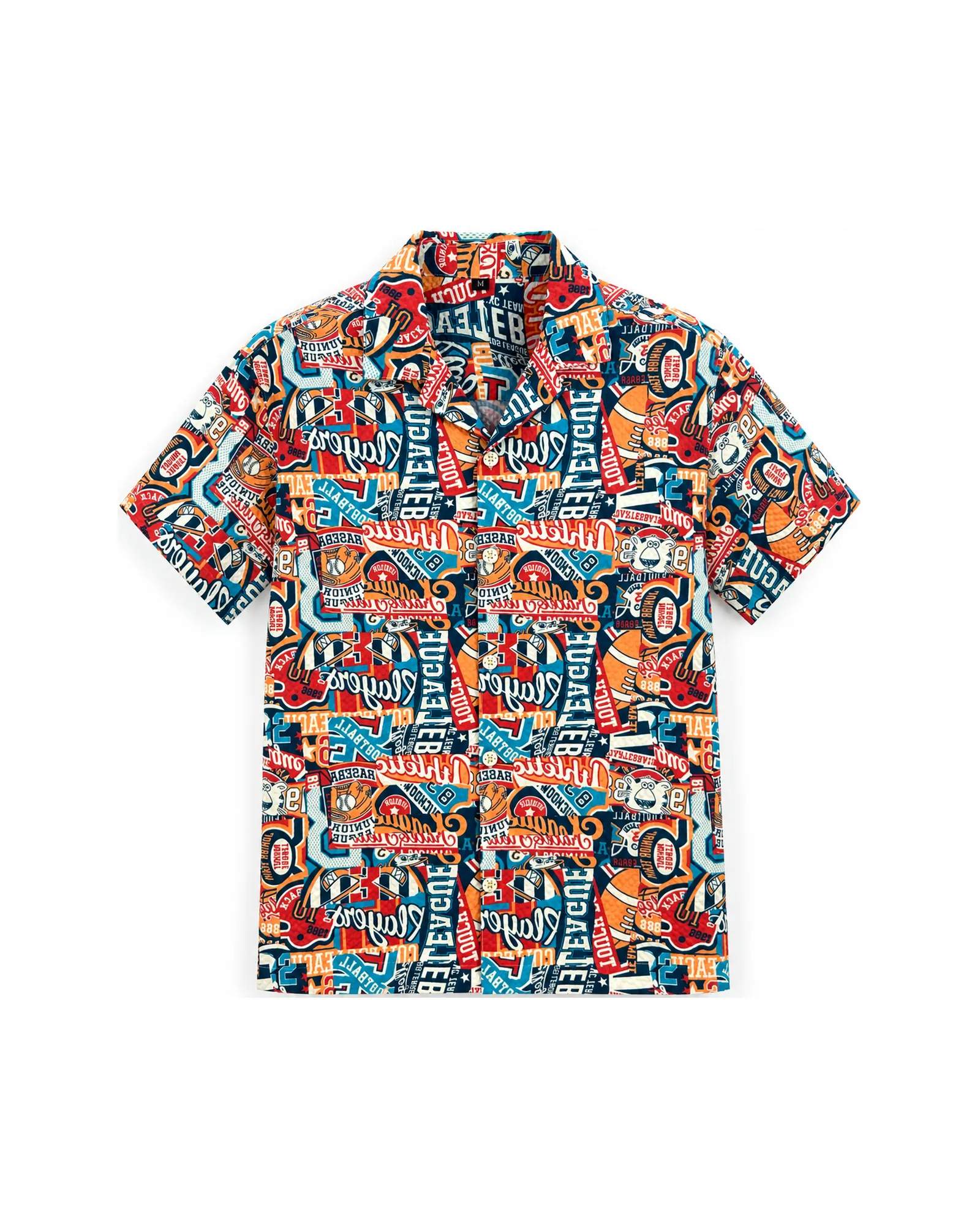
Product example: review the graphic scale and placement on the complete shirt, including the collar, pocket and front opening.
Do not rely on a mockup alone to communicate scale. State the repeat width and height, or give the dimensions of a recognizable motif. A print that looks balanced on a small screen may look much larger when printed at garment scale.
Ask for an actual-size section of the artwork and review it against the shirt pattern. If there are several sizes, confirm which features remain fixed and which placements need checking across the size range.
An all-over print does not automatically mean every seam will match. Identify the areas that matter to your design: the center front, chest pocket, collar, sleeve seams or side seams.
A large motif crossing the front opening needs a different placement plan from a small scattered repeat. Specify required alignment with annotated images. Ask the manufacturer to evaluate the effect on fabric consumption, cutting and cost before the quotation is finalized.
If exact matching is unnecessary, define an acceptable placement range. This gives both sides a clearer approval standard than asking for every piece to look identical to a single photograph.
Confirm the fiber composition, construction, weight, base color and desired hand feel before settling on a printing method. A method suitable for one fabric may not produce the same result on another.
Review a print trial on the proposed production fabric. Check fine details, dark areas, color appearance, coverage and the feel of the printed surface. If you are comparing options, use the same artwork so the differences are easier to judge.
For a broader fabric comparison, read How to Choose Fabric for Custom Short Sleeve Shirts.
A phone or laptop screen is not a reliable physical color reference. Where color matching matters, provide a physical reference or an agreed color standard and confirm how the printed trial will be assessed.
Review the colors together on the actual fabric, including transitions between light and dark areas. Keep the approved physical sample as the reference for production, and agree acceptable variation before bulk work begins.
A fabric print trial can help approve the artwork, but it cannot show every construction issue. A garment sample lets you assess the collar, front opening, pocket position, fit and overall print balance together.
Check the sample after the intended care process as well. Record measurements, appearance and any changes that need correction. Confirm whether a revised sample is required, and make sure the approved version is clearly identified.
Your original artwork and permission to reproduce any third-party elements.
Repeat dimensions and annotated placement requirements.
Garment drawings, reference images and size measurements.
Preferred fabric specification or samples to compare.
Quantity by style, colorway and size.
Label, button, packaging and delivery requirements.
Ask the quote to distinguish sample development, printing, garment production and any extra pattern-matching requirements. This makes it easier to compare offers on the same basis.
At our garment factory, we help develop custom short sleeve shirts from your design through fabric selection, sampling, garment production, labeling and packaging. The first step is to resolve the print, fit and construction details your collection depends on.
View our all-over print shirt example and customer cases, or request a quote. Send your artwork, expected quantities and target delivery window so we can assess the next sampling step.