
Journal
Journal
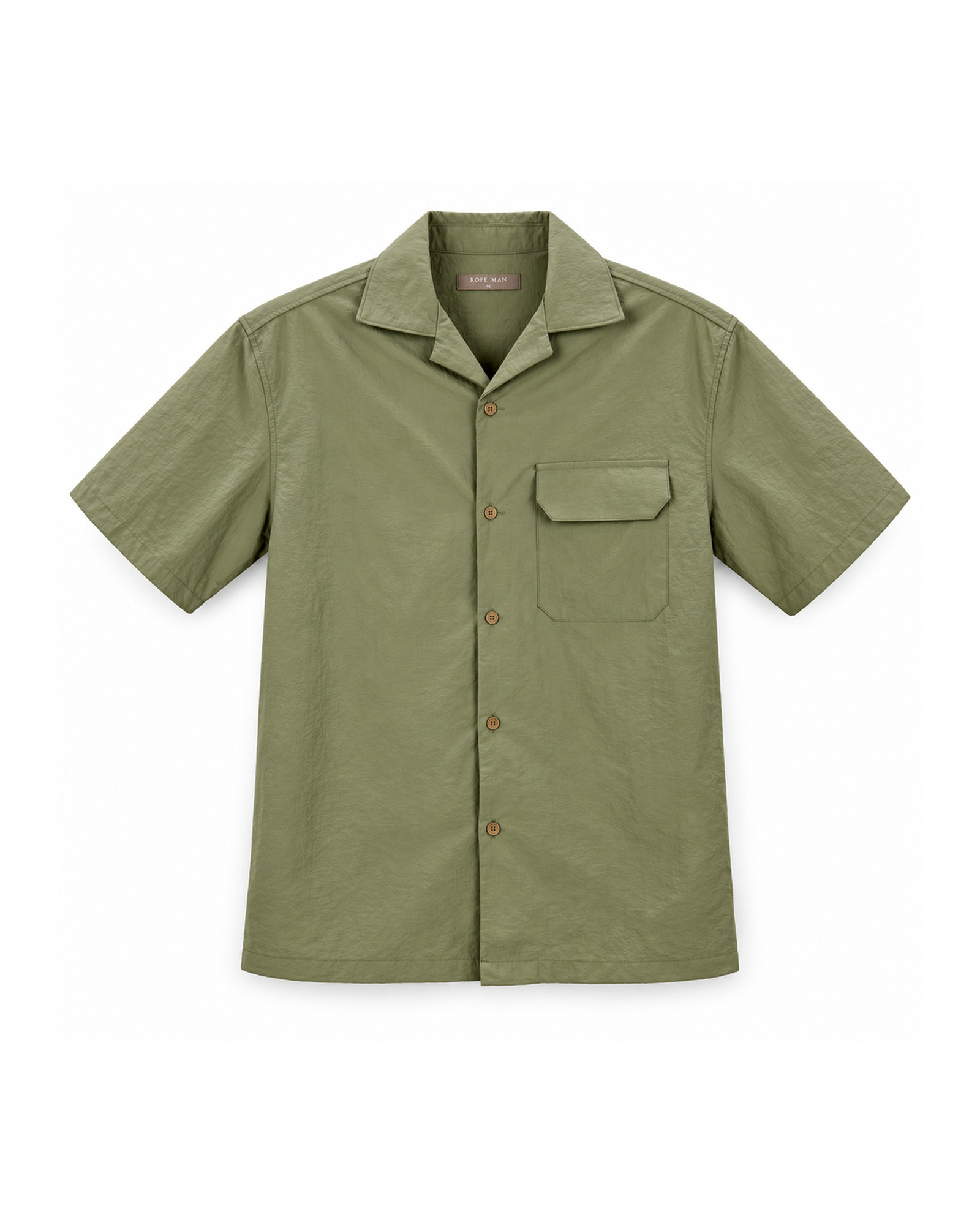
A fabric can look right in a reference photo and still behave differently in the finished shirt. When developing custom short sleeve shirts, start with the fit, wearing conditions and finish you want, then compare fabric options against those requirements.
A crisp, boxy shirt needs a different balance of structure and movement from a soft resort shirt. Check how a fabric supports the collar, placket, sleeves and pockets. Weight alone does not tell you how a shirt will drape: composition, weave and finishing also matter.
Our olive green camp-collar shirt illustrates why this matters. The open collar and flap pockets need enough support, while the body should still feel comfortable in a relaxed fit.
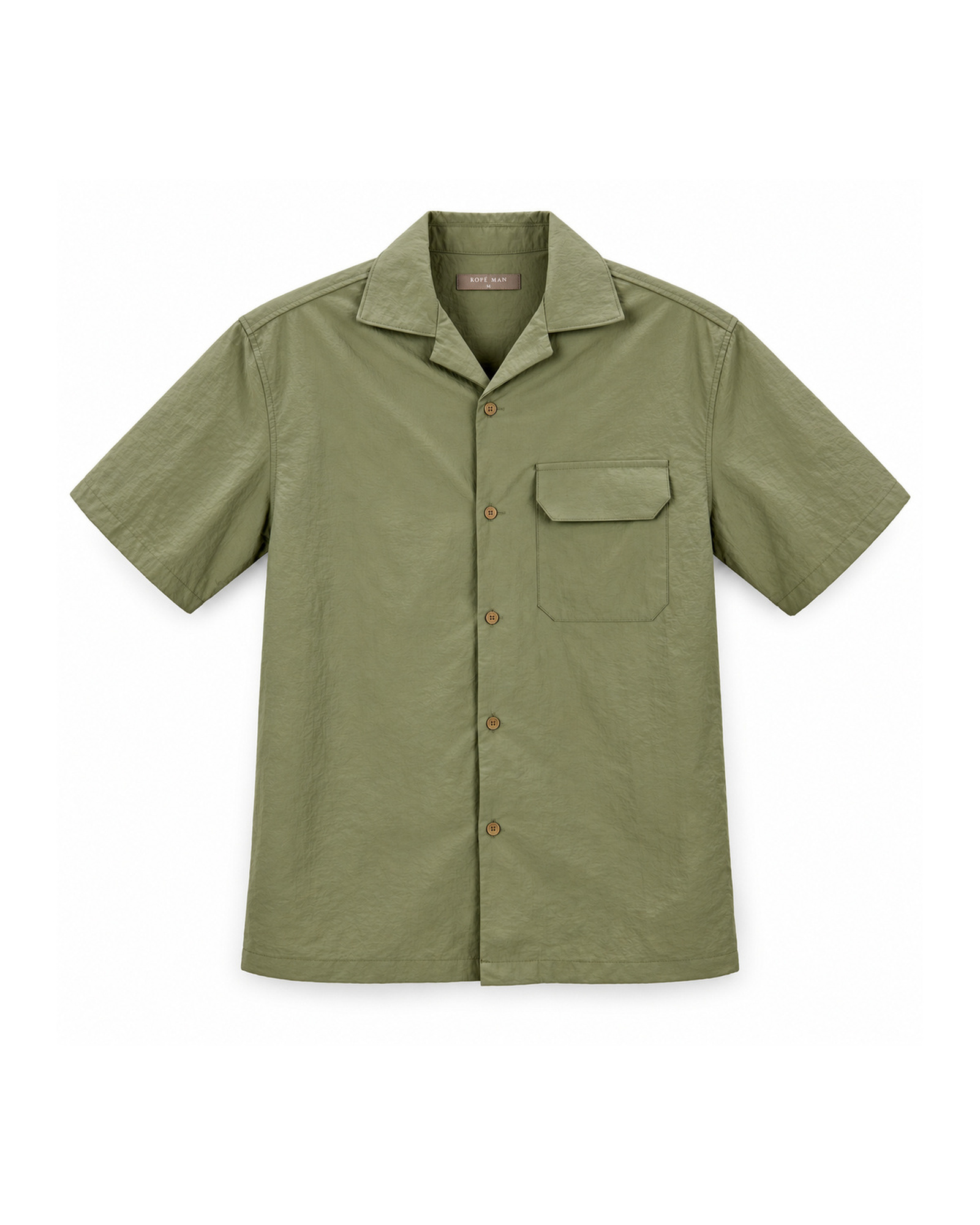
Design example: balance a relaxed silhouette with collar and pocket structure. Confirm the fabric specification during sampling.
Cotton: a useful starting point for everyday casual shirts. Compare poplin, Oxford and other constructions for the structure you need; check creasing and wash shrinkage.
Linen and linen blends: options for summer shirts with natural texture. Assess creasing, opacity and skin feel rather than choosing from appearance alone.
Viscose and lyocell: options to explore for softer, more fluid silhouettes. Check wash stability, seam performance and the care instructions of the specific fabric.
Polyester and blends: options when crease resistance and practical care are priorities. Compare breathability, surface shine and comfort in the intended climate.
Chambray and lightweight denim: options for casual or workwear-inspired shirts. Check stiffness, weight, color transfer and dimensional change after washing.
These are starting points for selection, not guarantees. Two fabrics with the same fiber composition can perform differently. The product images in this article illustrate design decisions; they do not identify the fiber content of each shirt.
For all-over print short sleeve shirts, review the fabric and artwork together. The surface, base color and printing method can affect detail and color reproduction. Check the scale and placement of the print on the garment, including pockets, seams and the front opening.
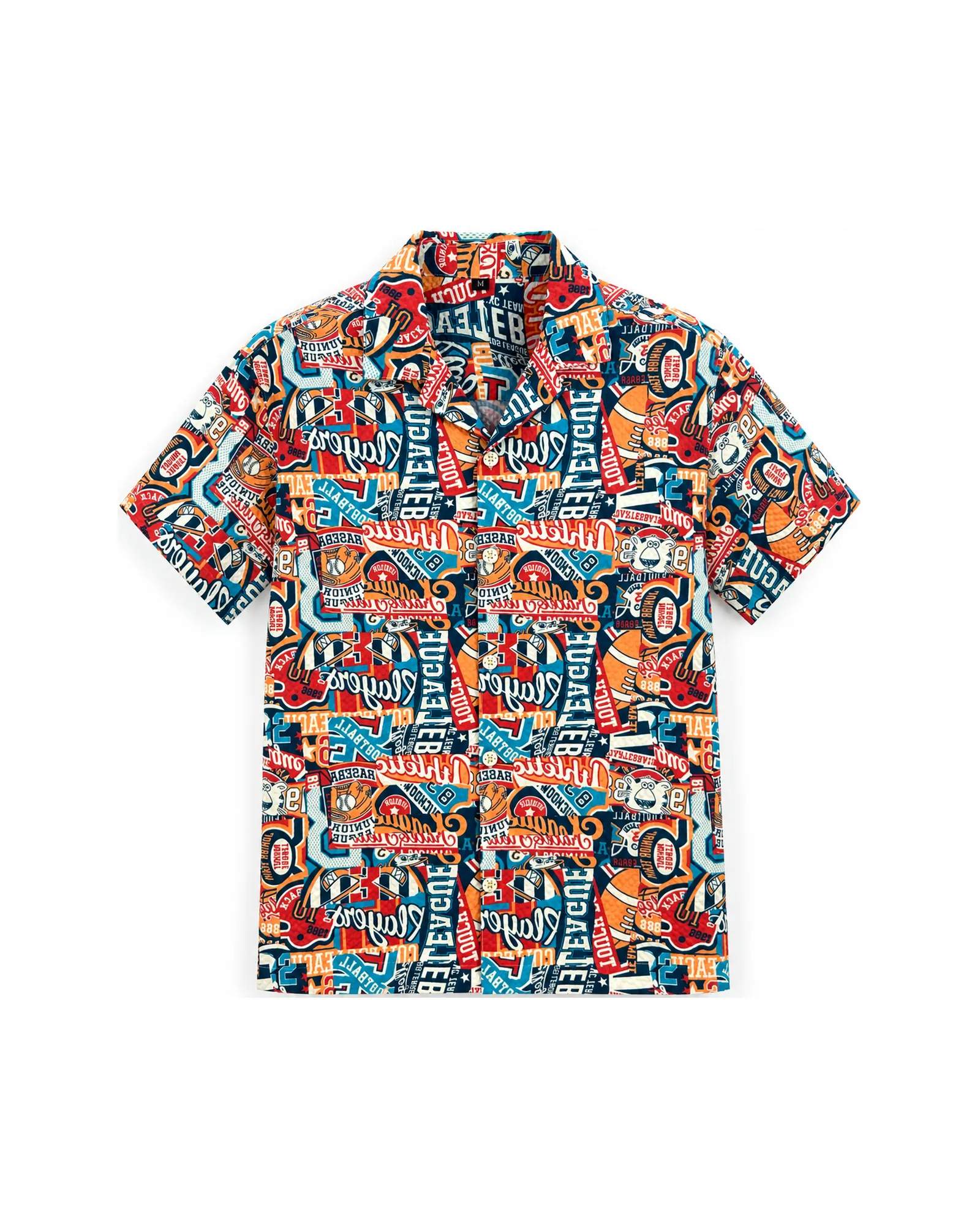
Design example: review the print on a garment sample, including the collar, pocket and front opening. The production method must be confirmed for your selected fabric and artwork.
If your collection calls for a faded or worn-in appearance, use a finished sample to agree the target look. A charcoal washed-look shirt is a useful visual reference, but the exact process depends on the selected fabric, dye and finish.
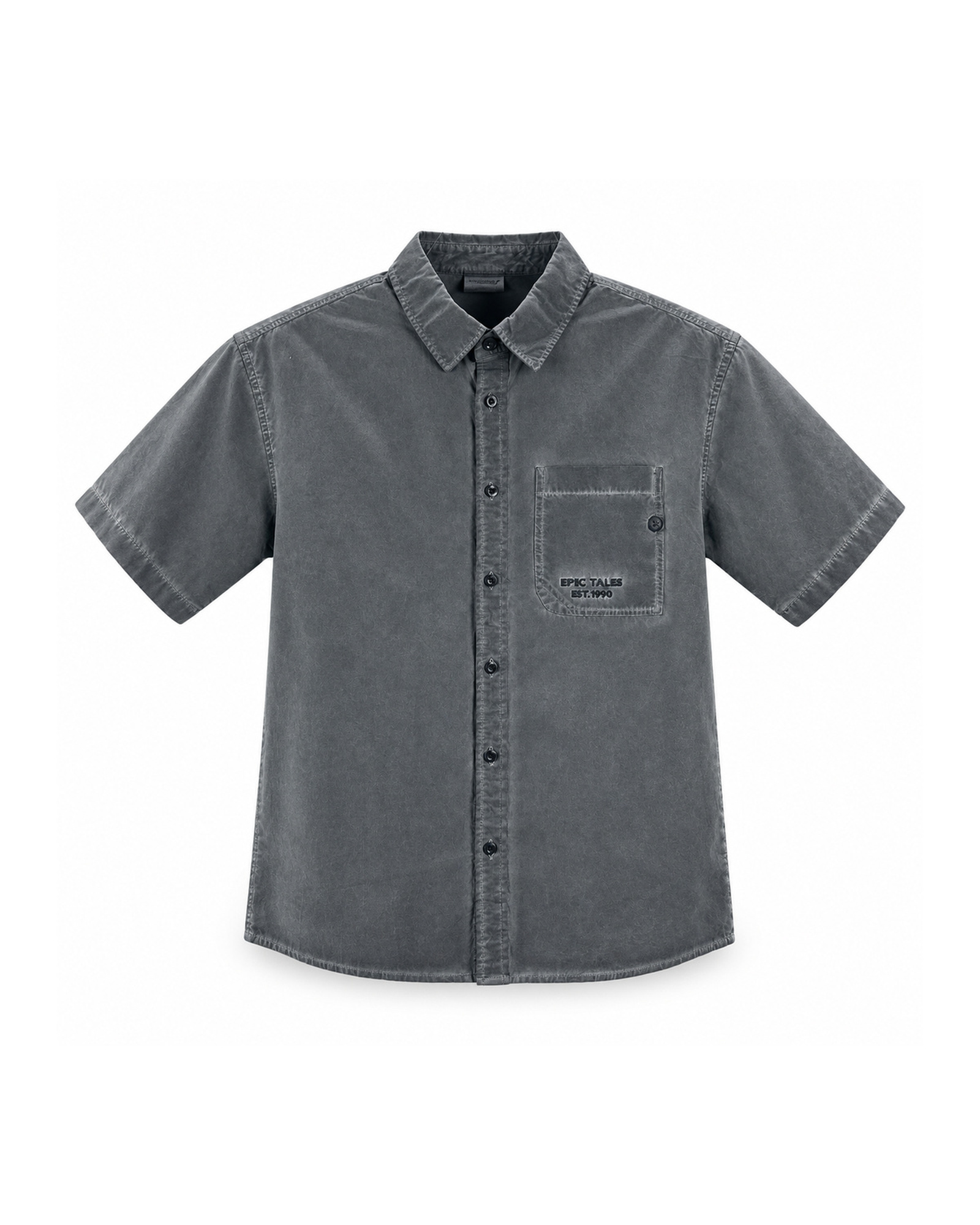
Before approving production, review color, hand feel, measurements and seam appearance after the intended treatment. Agree an acceptable range of variation with the manufacturer.
Textured fabrics, zippers and pockets should be evaluated together. On our textured short sleeve shirt with zip pockets, the key design question is whether the fabric supports the pocket construction without unwanted pulling or distortion.
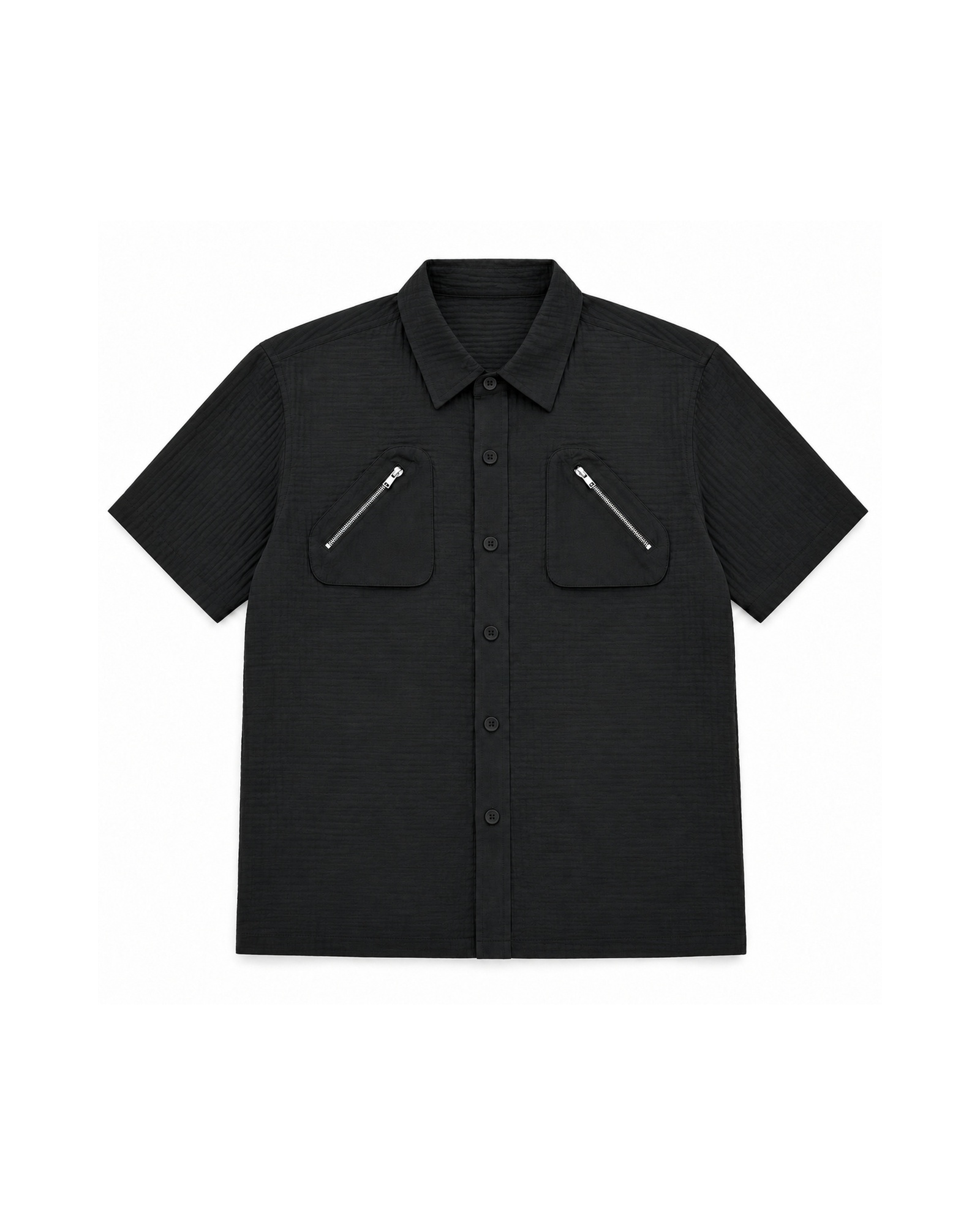
Check the assembled sample for puckering, pocket alignment, movement and comfort. If embroidery or other decoration is planned, assess it on the actual fabric before approval.
Confirm composition, construction, weight and color.
Review fit, drape, opacity and collar shape.
Approve print or decoration samples on the selected fabric.
Check measurements and appearance after the intended care or wash process.
Confirm the finished garment cost, minimum quantity and delivery requirements.
At our garment factory, we help turn your reference design into a finished shirt, from fabric selection and sampling to production, custom labels and packaging. The aim is to resolve the fabric, fit and construction details before bulk production.
Explore our finished products and customer cases, or request a quote for your next collection. Send your reference image or tech pack, expected quantity, target price and preferred fit so we can narrow down suitable fabric options for sampling.